A Safer, Smarter Way to Remove Calluses at Home
Calluses are annoying.
Your heels feel rough. Sandals suddenly become less appealing. And when the skin becomes especially thick, cracked, or uncomfortable, it can be tempting to attack it with whatever promises the fastest result.
Razors. Scrapers. Strong medicated pads. Aggressive filing.
But when it comes to your feet, more aggressive isn’t always better.
In fact, dermatologists recommend a much simpler approach: soften hardened skin first, then gently remove the dead skin rather than cutting it away.
That philosophy is exactly what inspired the Maundy approach to foot care.
Why do calluses form in the first place?
Calluses aren’t really the enemy.
They’re your body’s response to repeated pressure and friction. Your skin thickens to protect the tissue underneath it. Shoes, exercise, standing, walking, and everyday activity can all contribute to their formation.
So the goal shouldn’t necessarily be to aggressively strip away every layer of protective skin.
The goal is to safely remove the excess buildup while leaving healthy skin alone.
And that’s where technique matters.
The problem with the “attack the callus” approach
When people want smooth feet fast, it’s easy to become overly aggressive.
The American Academy of Dermatology specifically warns people not to remove too much skin when filing a callus because doing so can cause bleeding and infection.
Mayo Clinic similarly advises against trimming calluses yourself with sharp objects because of the risk of injury and infection.
Some over-the-counter corn and callus treatments use relatively high concentrations of salicylic acid. FDA’s OTC monograph permits salicylic acid concentrations of 12%–40% in medicated plasters and 12%–17.6% in liquid-film products marketed for corn and callus removal.
These products can work, but Mayo Clinic notes that salicylic-acid callus removers can also irritate surrounding healthy skin if they aren’t used carefully.
The lesson isn’t that every medicated callus remover is bad.
It’s that callus removal should be controlled.
The Maundy philosophy: soften first, exfoliate second
Maundy was designed around a simple idea:
Make the hardened skin easier to exfoliate instead of trying to aggressively cut or scrape it away.
The process is intentionally simple:
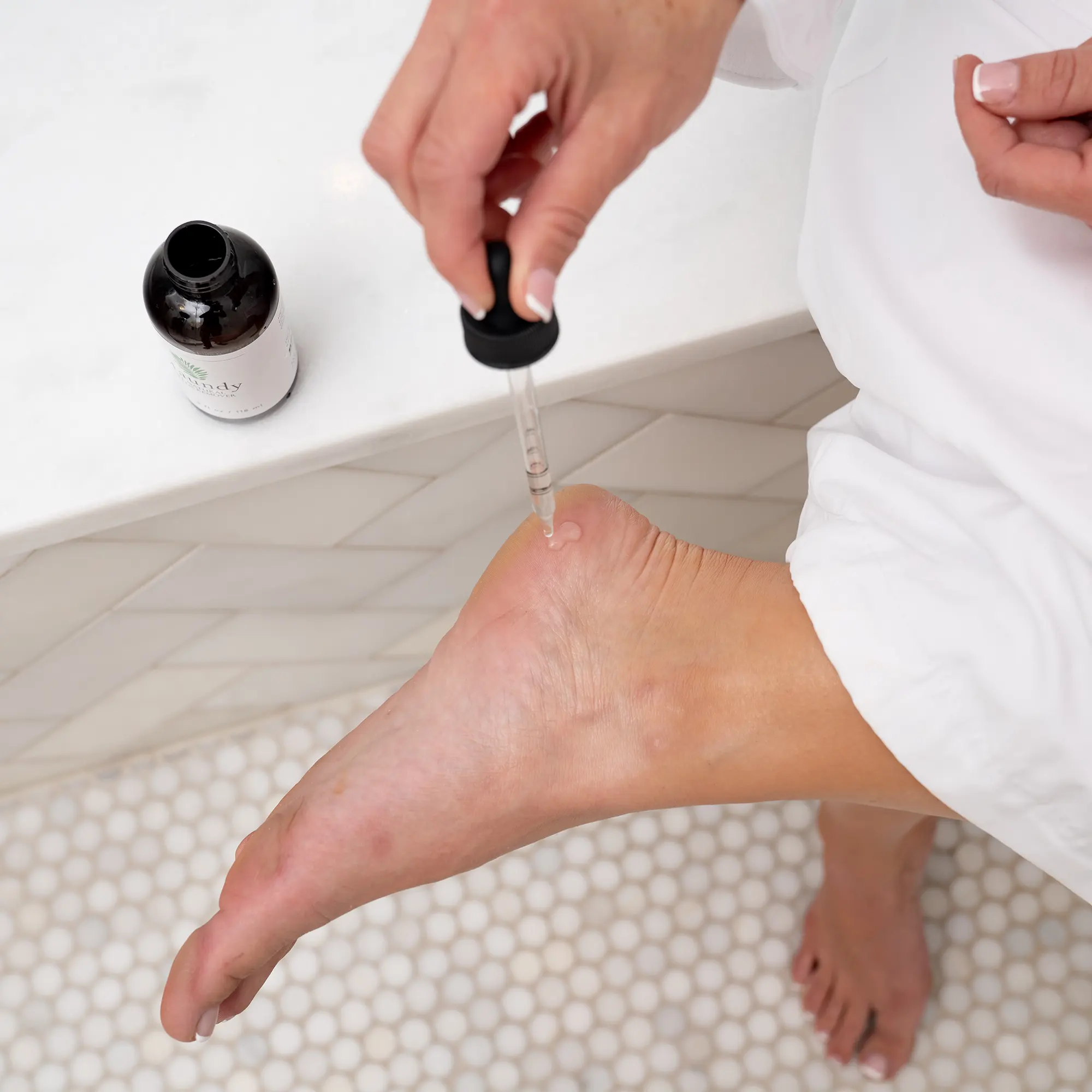
1. Apply Maundy to clean skin.
2. Allow it to sit briefly so the hardened skin can soften.
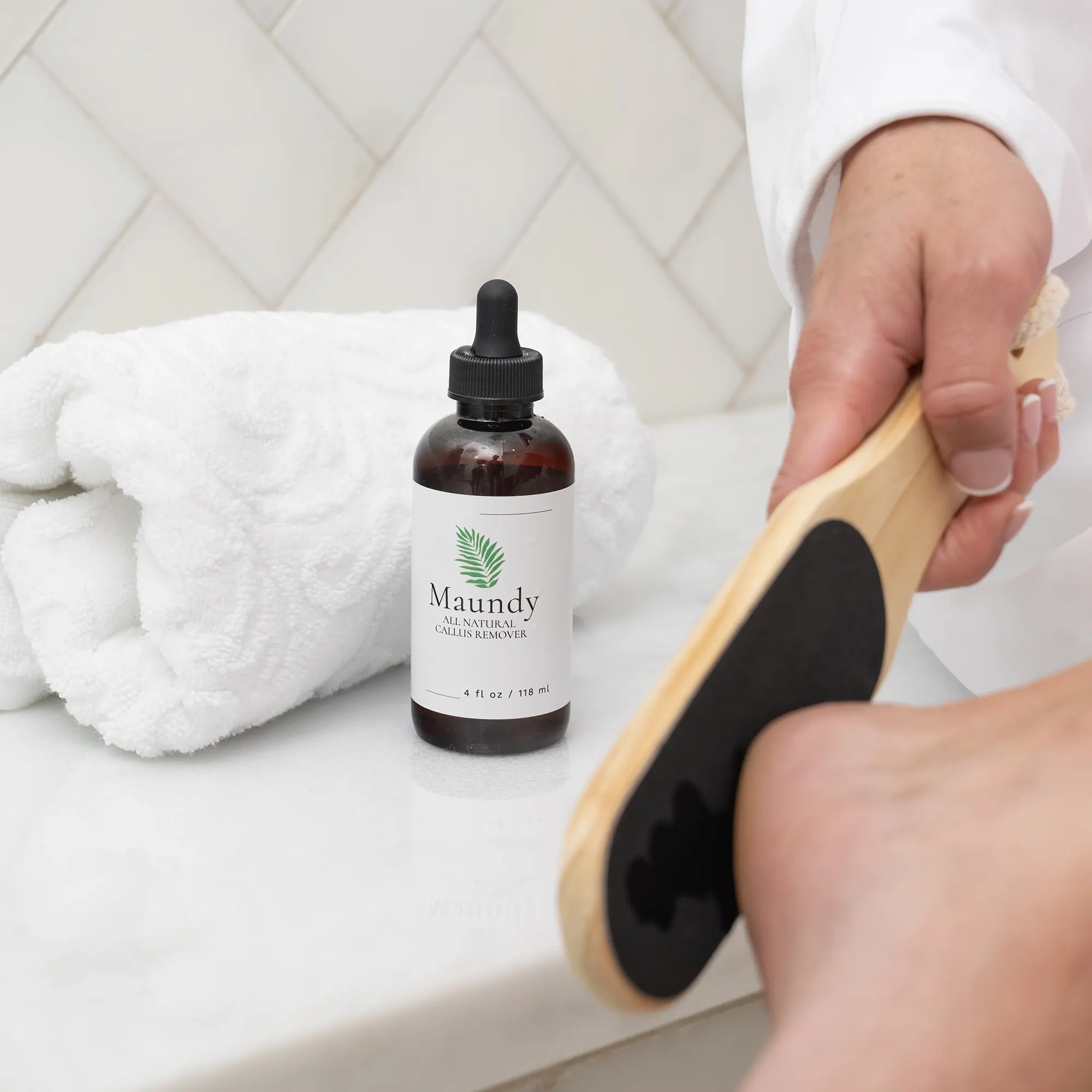
3. Place a small amount on the Maundy foot file.
4. Gently exfoliate the softened dead skin.
5. Rinse, dry and moisturize.
The difference is important.
Instead of repeatedly grinding away at dry, hardened skin, Maundy helps prepare the callused area before exfoliation.
That follows the same basic principle dermatologists recommend for ordinary callus care: soften first and then gently file.
No razor required
This may be one of the most important advantages of the Maundy method.
You shouldn’t need to take a blade to your feet.
Cleveland Clinic specifically advises people to never cut, shave or remove calluses using a sharp object.
With Maundy, the goal isn’t to cut the callus off.
It’s to soften the dead buildup so that it can be gradually exfoliated away with a foot file.
That’s a very different philosophy.
Soften. Exfoliate. Rinse. Moisturize.
Your bathroom does not need to become an operating room.
Effective foot care doesn’t need to feel aggressive
There’s a strange assumption in beauty products that if something burns, stings or feels extreme, it must be working.
That’s not a very good standard.
Great foot care should give you control.
You should control where the product goes.
You should control how long it stays on.
You should control how much skin you exfoliate.
And you should be able to stop when you’ve reached healthy, smooth skin.
That’s the approach Maundy was created around.
What makes Maundy different?
Maundy combines a callus-softening formula with controlled manual exfoliation.
The current Maundy formula listed online includes ingredients such as vitamin A, vitamin E, sacha inchi oil and coconut oil alongside the ingredients responsible for softening hardened skin.
That means the experience isn’t simply about removing dead skin.
It’s part of an overall foot-care routine designed around smoother, better-cared-for feet.
And because the Maundy foot file is reusable, you determine exactly how much exfoliation your feet need.
The safest callus-removal habit may actually be prevention
Even the best callus remover can’t eliminate the reason a callus formed.
Calluses develop because of repeated pressure or friction. Dermatologists therefore recommend properly fitting shoes, protective padding where needed and regular moisturizing to help prevent them from returning.
Think of Maundy as part of the routine:
Remove the buildup.
Moisturize the skin.
Reduce the friction.
Maintain the results.
That’s a much better long-term strategy than waiting until your heels are painfully rough and attacking them all over again.
Beautiful feet shouldn’t require extreme measures
You shouldn’t have to choose between rough, cracked-looking heels and an aggressive callus-removal routine.
Maundy gives you another option.
A simple process.
A controlled process.
And a smarter way to care for one of the hardest-working parts of your body.
Ready for smoother feet?
Soften. Exfoliate. Rinse. Moisturize.
Discover the Maundy approach to smoother, softer feet.
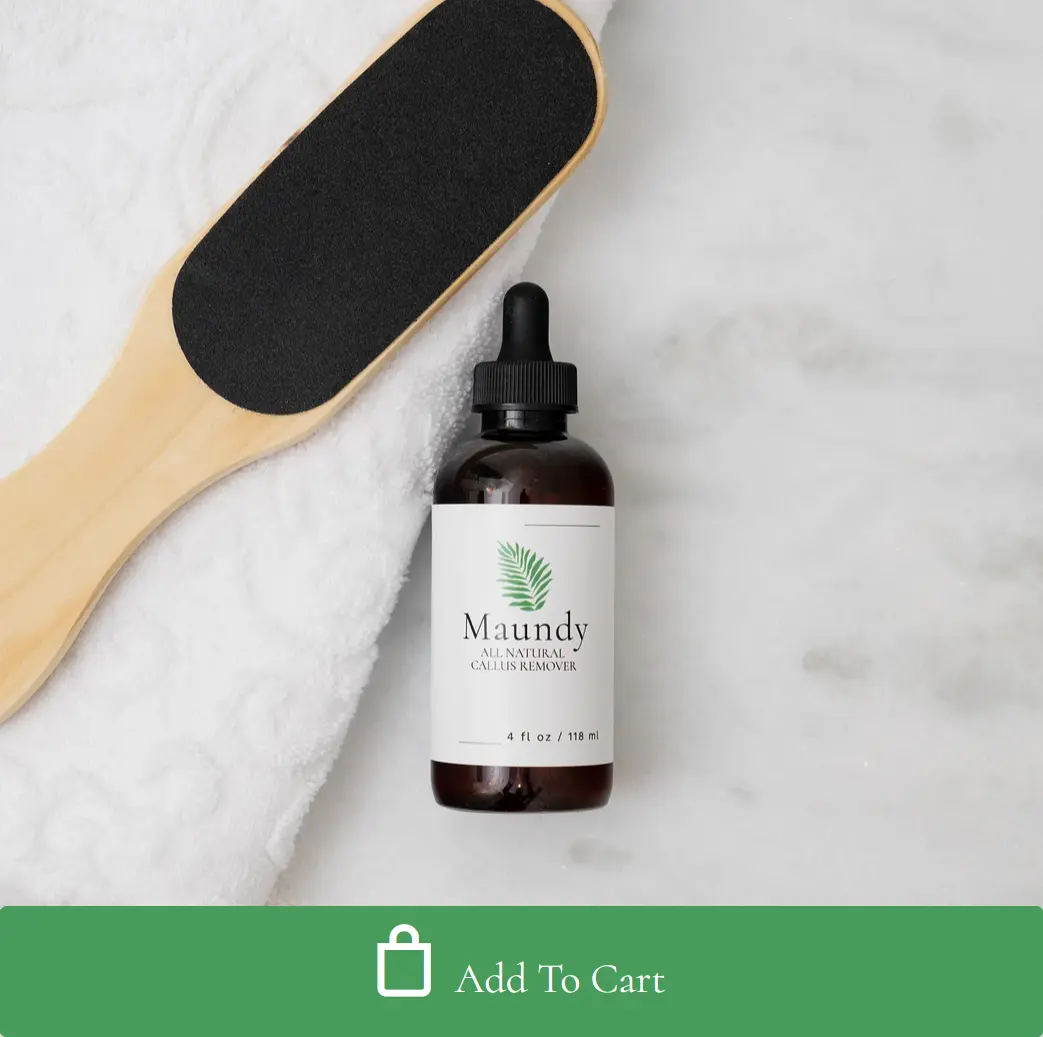
Buy now the Maundy’s All-Natural Callus Remover – the perfect solution for smooth, healthy feet!